
How does the VoIP installation process work, and what should I expect?
Understand the VoIP installation process and what to expect with our comprehensive guide. Improve your connectivity with our voice over IP service.
The VoIP installation process is designed to be structured, predictable and minimally disruptive to your business. It typically begins with an assessment of your current phone system, internet connection and internal network to confirm that everything can support reliable voice over IP calls. During this stage, you can expect a detailed discussion about how many users you have, how your teams work, whether you need desk phones, softphones or mobiles, and which features are essential, such as call recording, hunt groups, auto-attendants and voicemail to email. A clear proposal and implementation plan are then created, outlining timescales, equipment requirements and any potential downtime, so you know exactly what will happen and when.
Once the design is agreed, the physical and technical installation takes place. This may involve configuring your router and firewall for VoIP traffic, setting up cloud-based phone system settings, installing handsets or headsets, and integrating with existing systems such as CRM or contact centre platforms. Your numbers are then ported from your current provider to the new VoIP service, usually scheduled outside peak hours to avoid missed calls. Finally, the system is tested thoroughly, staff are trained, and ongoing support arrangements are confirmed. Overall, you should expect a staged, well-communicated process that delivers a modern, flexible phone system with minimal disruption to your day-to-day operations.
The process usually starts with a site survey and requirements gathering session. This allows the provider to check your broadband capacity, internal cabling, WiFi coverage and power availability, while also understanding how calls flow through your organisation. The outcome is a tailored design that specifies the number of extensions, call routing rules and any additional services, such as call reporting or remote worker support.
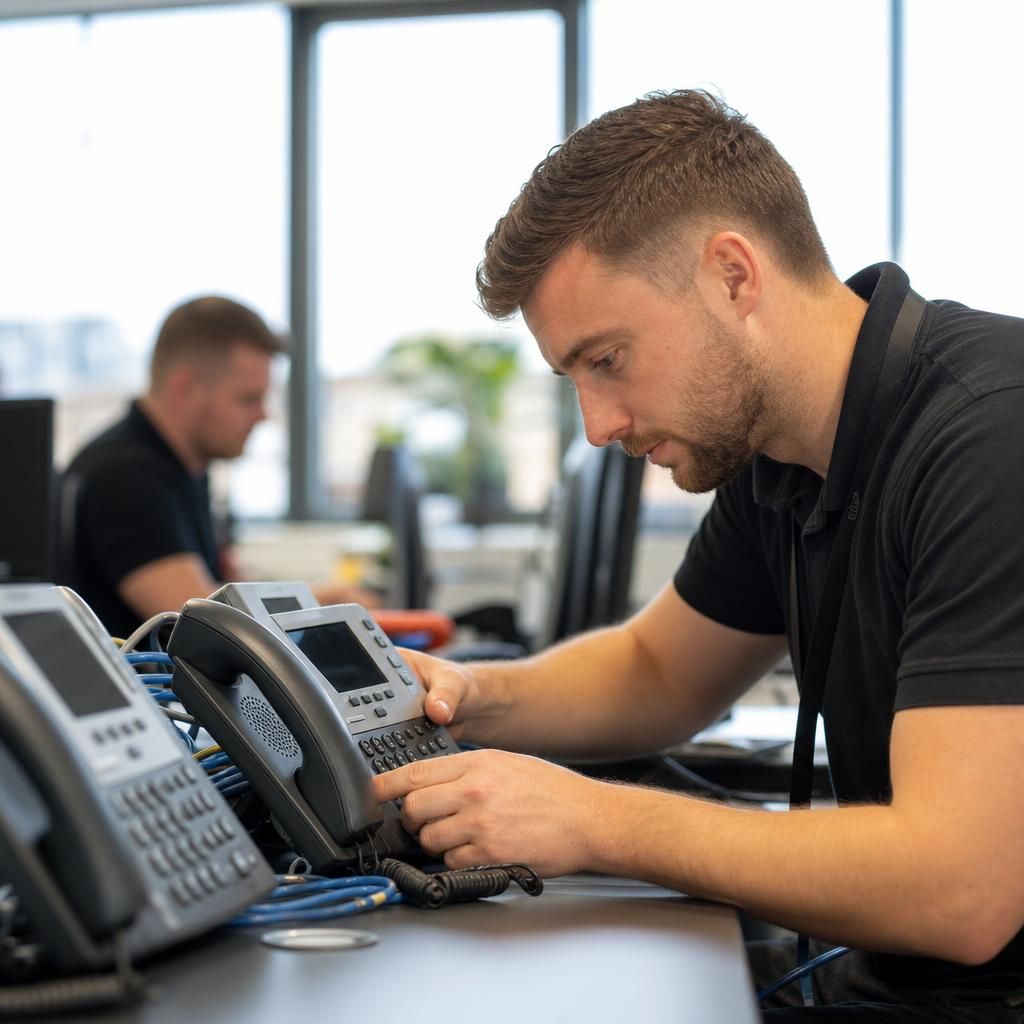
Installation and configuration follow, often combining on-site engineering with remote setup. Routers and switches may be optimised for voice traffic, IP phones are registered to the system, and user profiles are created with the correct permissions and features. Test calls are made to confirm call quality, reliability and correct routing to departments or individuals.
The final stages involve number porting, user training and handover. Porting dates are agreed in advance, staff are shown how to use handsets and softphone apps, and support contacts and procedures are explained. You should expect clear communication, documented settings and reassurance that help is available if you need adjustments after go-live.
Streamline Your VoIP Installation Today
Experience seamless connectivity and enhanced communication with our expert VoIP installation services. Let us help you set up the best business phone systems for your small office network.
Contact Us