
How does the VoIP installation process work for small and medium-sized enterprises?
Discover how the IP phone system installation process works for small and medium-sized enterprises. Simplify your business communication today.
For small and medium-sized enterprises, the VoIP installation process is typically structured, phased and designed to minimise disruption to day-to-day operations. It begins with an assessment of your existing telephony, broadband and internal network infrastructure. During this stage, the provider gathers information about user numbers, call volumes, office layout, existing cabling and any remote or hybrid working requirements. This information shapes the proposed solution, including the type and number of IP handsets, required bandwidth, call routing plans and any integration with existing systems such as CRMs or contact centre software. A clear project plan and timeline are then agreed, covering pre-installation preparation, on-site work, testing and staff training.
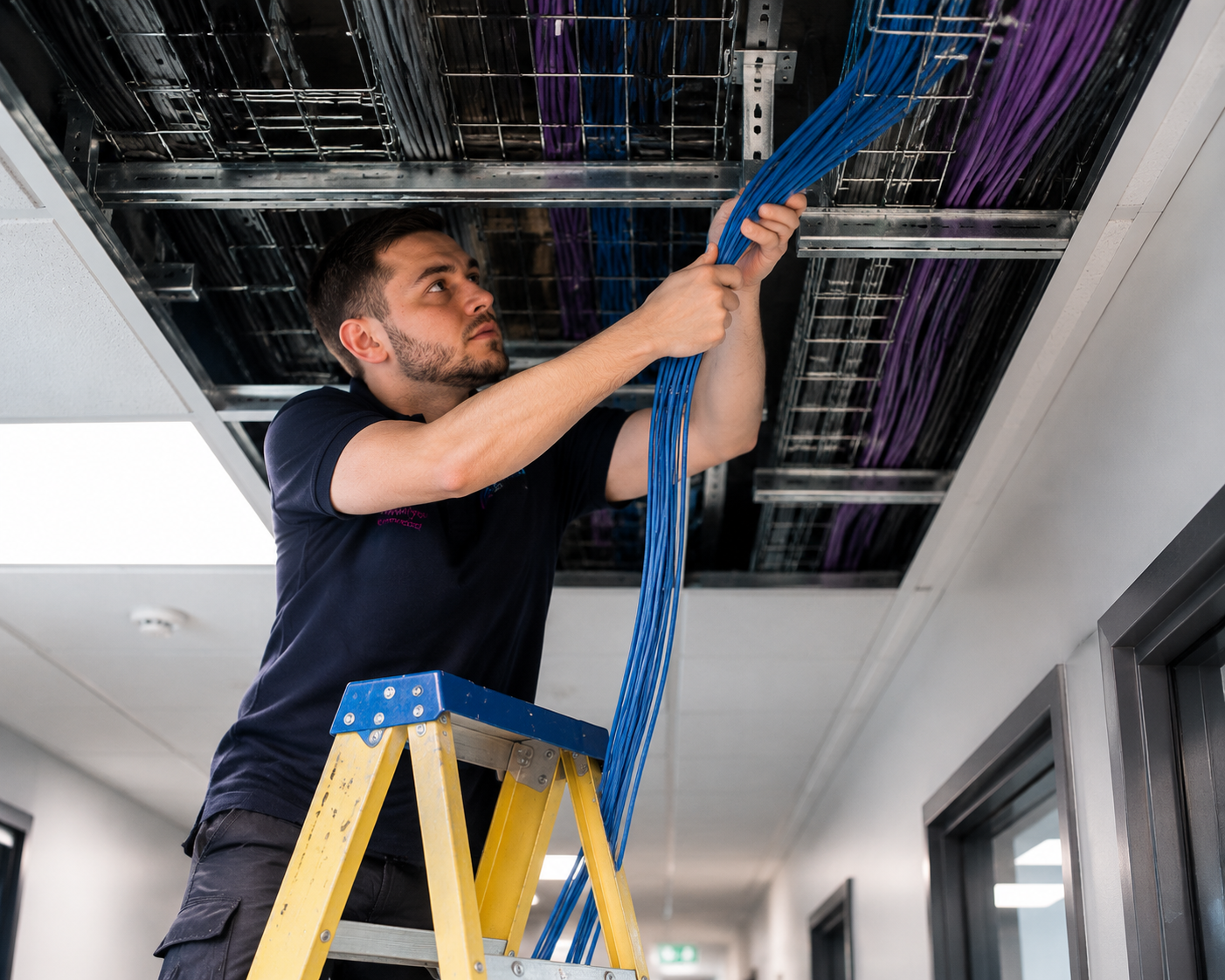
Once the design is approved, the technical implementation follows. This usually involves configuring the hosted or on-premise VoIP platform, setting up user accounts and extensions, and preparing call flows, hunt groups, voicemail and auto-attendant menus. On-site work may include installing or upgrading structured cabling, deploying Power over Ethernet (PoE) switches, configuring routers and firewalls for Quality of Service (QoS), and installing IP phones or softphone applications. The system is then tested thoroughly for call quality, reliability and feature performance before going live. Finally, users receive training on the new system, and ongoing support is put in place to ensure the VoIP solution remains stable, scalable and aligned with the organisation’s communication needs.

The process typically starts with a discovery and planning phase. Here, the provider reviews your call patterns, number of users, future growth plans and any compliance or call recording requirements. They also test your broadband and internal network to confirm it can support VoIP traffic with sufficient bandwidth and low latency, recommending upgrades where needed.
Next comes configuration and physical installation. The VoIP platform is set up with your numbering plan, extensions, call groups, time-based routing and voicemail policies. Engineers then install any required cabling, network switches, routers and IP phones, ensuring Quality of Service settings prioritise voice traffic. Softphones and mobile apps are configured for remote or hybrid workers.
Finally, the system is tested and handed over. Test calls are made internally and externally, features such as transfers, conferencing and auto-attendants are verified, and failover or backup options are checked. Staff receive training, and ongoing monitoring and support are arranged to keep the system performing reliably.
Upgrade Your Business Communication Today
Streamline your operations with our expert VoIP installation services for SMEs. Enhance your internal phone systems and automated calling capabilities with seamless, efficient, and reliable solutions.
Contact Us