
Can I integrate MS Teams Telephony with my existing telecom systems and infrastructure?
Discover how to seamlessly integrate Microsoft team phone with your existing telecom systems. Learn from experienced Midlands telecom specialists.
Integrating Microsoft Teams telephony with your existing telecom systems and infrastructure is not only possible, it is often the most practical route for organisations that want to modernise without discarding current investments. Microsoft Teams can be enabled as a fully featured phone system (often referred to as Microsoft Teams Phone), allowing users to make and receive external calls through the familiar Teams interface. This can be achieved while retaining existing SIP trunks, on-premise PBX equipment, contact centre platforms, analogue devices or specialist lines, provided the right connectivity model is chosen. For many Midlands businesses, this hybrid approach offers a controlled migration path, minimising disruption and helping to manage costs.
There are two main ways to integrate: using Microsoft Calling Plans or, more commonly for SMEs and multi-site organisations, using Direct Routing or Operator Connect. Direct Routing allows your existing telecom provider or SIP trunk to connect into Microsoft Teams via a certified Session Border Controller (SBC). This means you can keep current numbers, call routing policies and, in many cases, existing handsets or analogue lines, while gradually moving users onto Teams. With careful planning, the result is a unified communications environment where desk phones, softphones, mobiles and meeting rooms all work together, backed by local engineering support and ongoing management.
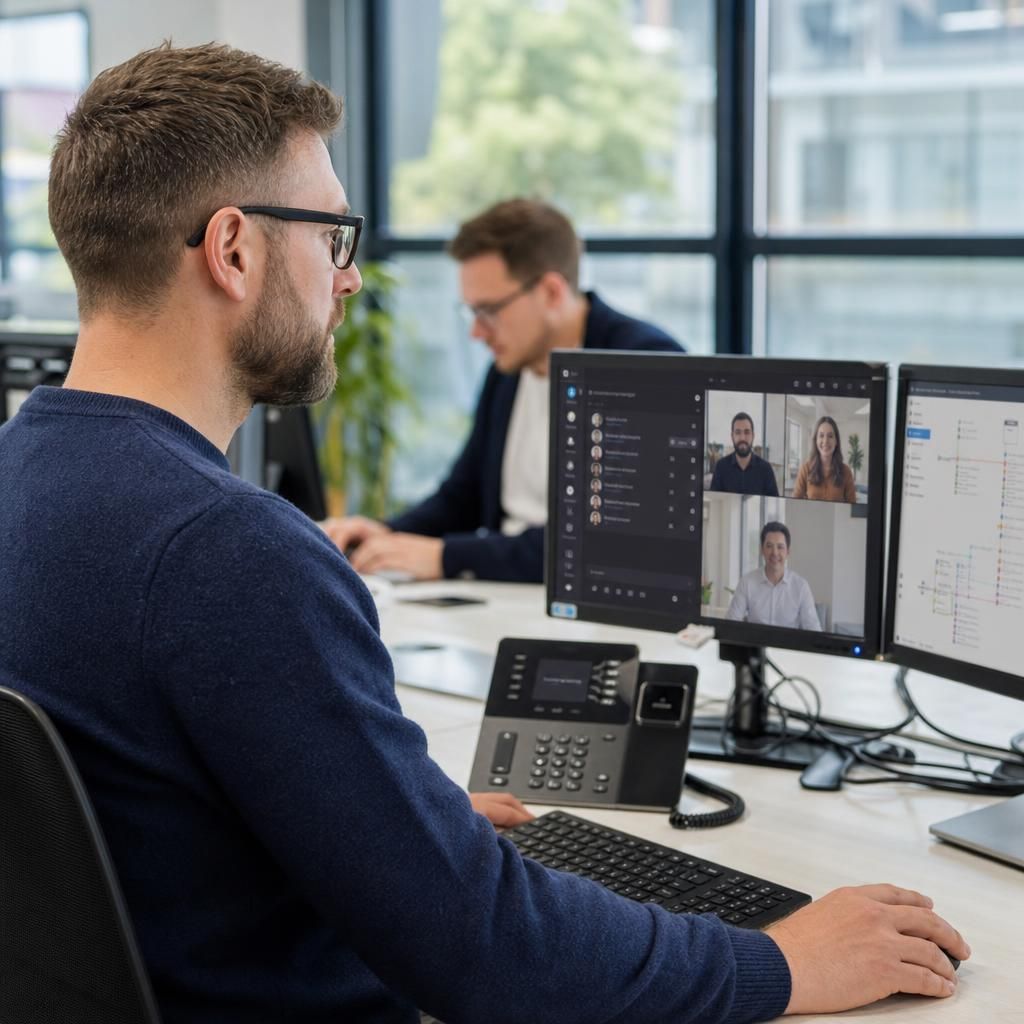
The most flexible integration option is Direct Routing, which links your existing SIP trunks or PBX to Microsoft Teams through a certified SBC. This allows you to retain current telephone numbers, call plans and routing rules, while giving users the ability to make and receive calls directly within Teams on their laptops, mobiles or Teams handsets.
Where organisations rely on legacy systems, such as analogue lines, door entry phones, lift lines or fax, these can usually be incorporated using gateways and appropriate configuration. This ensures essential services remain operational while Teams is introduced as the primary user interface for voice, video and collaboration.
A phased migration is often recommended. Key departments can be moved to Teams first, with parallel running alongside the existing phone system. This approach allows testing, user training and refinement of call flows before a full cutover, helping ensure reliability, call quality and business continuity across all sites and offices.
Seamlessly Connect Your Telecom Systems with MS Teams
Unlock the full potential of Microsoft Teams by integrating it with your existing telecom infrastructure. Our Midlands specialists ensure a smooth transition, enhancing communication and boosting productivity.
Contact Us