

What are the common issues businesses face with CCTV cabling, and how can they be resolved?
Discover common CCTV cabling issues businesses face and solutions to resolve them with our network cabling services. Enhance your office's surveillance today.
CCTV cabling is a critical but often overlooked element of a business security system. When cabling is poorly specified, badly installed or left unmanaged as the site evolves, it can lead to intermittent video, complete camera failure, or degraded image quality that only becomes apparent when footage is needed most. Common issues include using the wrong cable type for the distance or environment, inadequate power delivery, electromagnetic interference from electrical equipment, and untidy or undocumented cable routes that make fault-finding slow and disruptive. For multi-site SMEs and growing organisations, legacy cabling that has been added to piecemeal over the years can create a patchwork network that is difficult to support and expensive to upgrade.
These problems can be resolved through proper design, professional installation and ongoing maintenance of CCTV cabling. Selecting the correct grade of coaxial or network cable, planning routes away from power lines, and using high-quality connectors and terminations all help maintain signal integrity and reliability. Structured cabling principles, such as clear labelling, patch panels and documented layouts, make it easier to add or move cameras without compromising performance. Regular testing, including signal and continuity checks, can identify deteriorating runs before they fail. By combining well-planned CCTV cabling with robust network infrastructure and local engineering support, businesses can maintain dependable surveillance coverage, reduce downtime and ensure their security systems scale effectively with future growth.
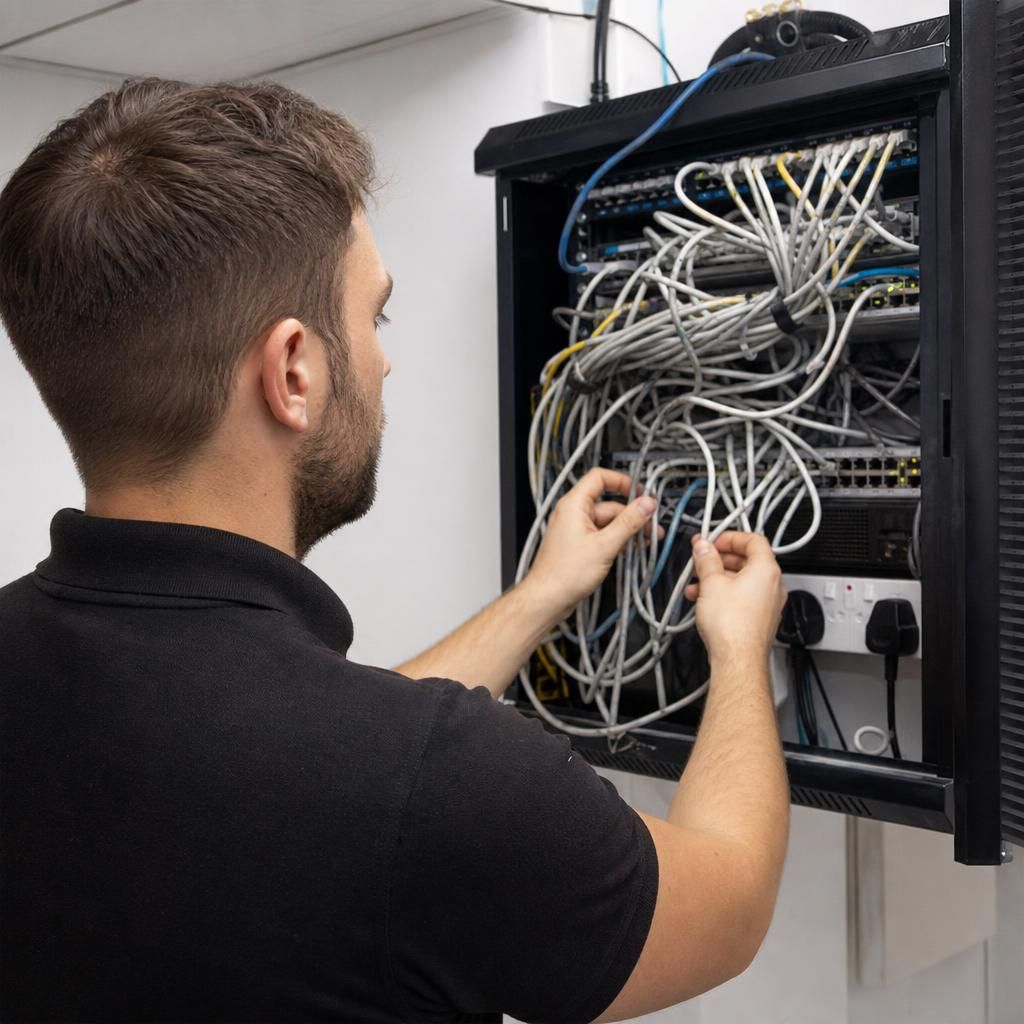
One of the most frequent issues is signal loss or poor image quality caused by unsuitable or low-grade cabling. Using the wrong type of coaxial or network cable for the distance, or mixing cable types, can result in ghosting, noise or dropped frames. This is resolved by standardising on appropriate, high-quality cabling, observing maximum run lengths, and using baluns or switches where necessary to maintain performance over longer distances.
Another common problem is interference and physical damage. Running CCTV cables alongside mains power, fluorescent lighting or machinery can introduce electromagnetic interference, while exposed or loosely fixed cables are vulnerable to wear and accidental damage. Careful route planning, separation from power lines, use of containment such as trunking or conduit, and proper strain relief significantly reduce these risks.
Finally, unmanaged or undocumented cabling creates maintenance headaches. Lack of labelling, ad-hoc extensions and hidden junctions make fault-finding slow and disruptive. Applying structured cabling practices, clear labelling, and maintaining up-to-date records enables faster troubleshooting, simpler upgrades and more reliable day-to-day operation.
Resolve Your CCTV Cabling Issues Today
Our expert network cabling services ensure seamless CCTV installation, enhancing your business's security. Trust us to tackle any cabling challenges and safeguard your office efficiently.
Contact Us