

What factors should I consider when selecting a business broadband provider for my office?
Discover key factors to consider when choosing broadband business services for your office. Enhance connectivity, reduce costs, and support daily operations.
Selecting a business broadband provider for your office requires careful consideration of both technical performance and commercial reliability. The starting point is to assess your organisation’s current and future connectivity needs: the number of users, the type of applications you run, and whether you rely heavily on cloud services, video conferencing, VoIP, or large file transfers. From there, you can determine the bandwidth and connection type you require, whether that is fibre, leased lines, or a more basic business-grade connection. It is also essential to examine the service level agreements (SLAs), uptime guarantees, and resilience options such as backup lines or automatic failover, as these directly impact your ability to operate without disruption.
Beyond raw speed and uptime, it is important to evaluate the quality of support and ongoing management you will receive. Look for providers that offer proactive monitoring, clear response times, and access to knowledgeable technical staff who understand business priorities. Security features, such as robust firewalls and traffic management, should also be considered, particularly if you handle sensitive data or operate across multiple sites. Finally, pricing structures, contract terms, scalability options, and any bundled services should be reviewed in detail to ensure the solution remains cost-effective as your business grows. A well-chosen provider will deliver a stable, secure, and scalable connection that underpins daily operations and supports long-term plans.
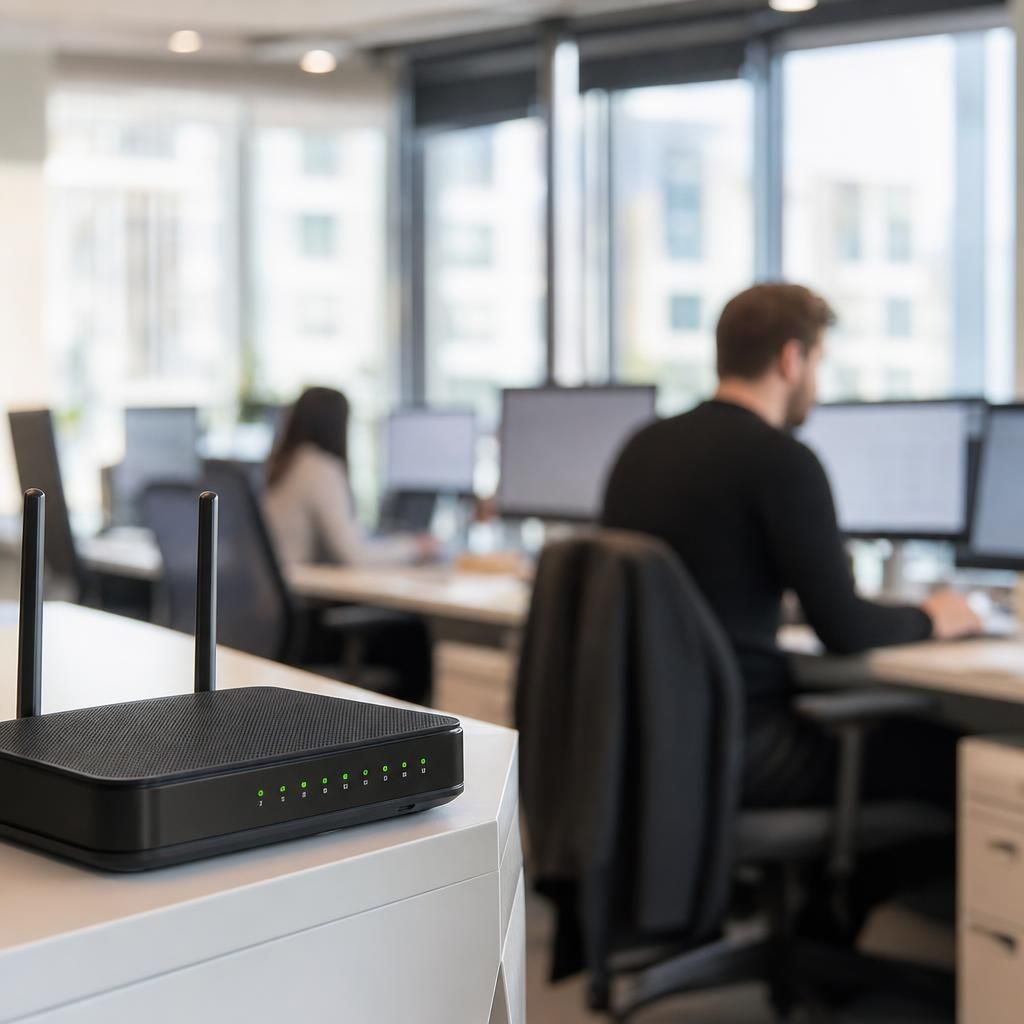
Begin by matching the broadband service to your operational profile. High-growth or data-intensive offices typically benefit from dedicated fibre or leased lines, while smaller teams may function well with a contended business fibre service. Check upload as well as download speeds, latency, and any usage caps, as these can affect cloud backups, remote access, and real-time communications.
Next, scrutinise reliability and support. Strong SLAs should specify uptime targets, fault response times, and compensation for prolonged outages. Ensure you have access to local engineering support, clear escalation paths, and 24/7 fault reporting where necessary. Consider resilience options, such as secondary connections or mobile failover, to maintain continuity.
Finally, review security, scalability, and cost. Confirm that the provider supports secure configurations, traffic prioritisation for critical services, and options to add bandwidth or additional sites easily. Compare contract length, installation charges, and any bundled telephony or mobile services to achieve a balanced, long-term value.
Choose the Right Broadband for Your Business
Optimize your office connectivity with our expert guidance on selecting the best broadband services. Boost productivity, save costs, and ensure seamless operations tailored to your business needs.
Contact Us