

What is the installation process like for business broadband, and how long does it typically take?
Uncover the process and duration of business broadband installation. Expert advice tailored for SMEs seeking seamless connectivity solutions.
For most organisations, the business broadband installation process is straightforward, provided the requirements are understood in advance and the site is properly prepared. The journey usually begins with a consultation to establish your bandwidth needs, number of users, critical applications and any resilience requirements. A suitability check is then carried out on your premises to confirm which access technologies are available, such as fibre, FTTC, SOGEA or leased lines, and whether any additional engineering work is required. Once the order is placed, the provider will coordinate with network operators and arrange an installation date, keeping you informed of any pre-visit surveys or access needs. This planning stage is essential to avoid disruption to your day-to-day operations.
The time it takes to get business broadband installed can vary from a few working days to several weeks, depending on the type of service and the existing infrastructure. Standard fibre or FTTC broadband, where lines are already present, is typically activated within 5–15 working days. More complex solutions, such as dedicated leased lines or new fibre builds, can take 30–90 days or longer if wayleaves, roadworks or building access permissions are required. A well-managed installation will include clear timelines, temporary connectivity options where possible, and out-of-hours switchover to minimise downtime. With the right planning and communication, most SMEs can move to a new broadband service with only a short interruption, achieving a more reliable and scalable connection that supports future growth.
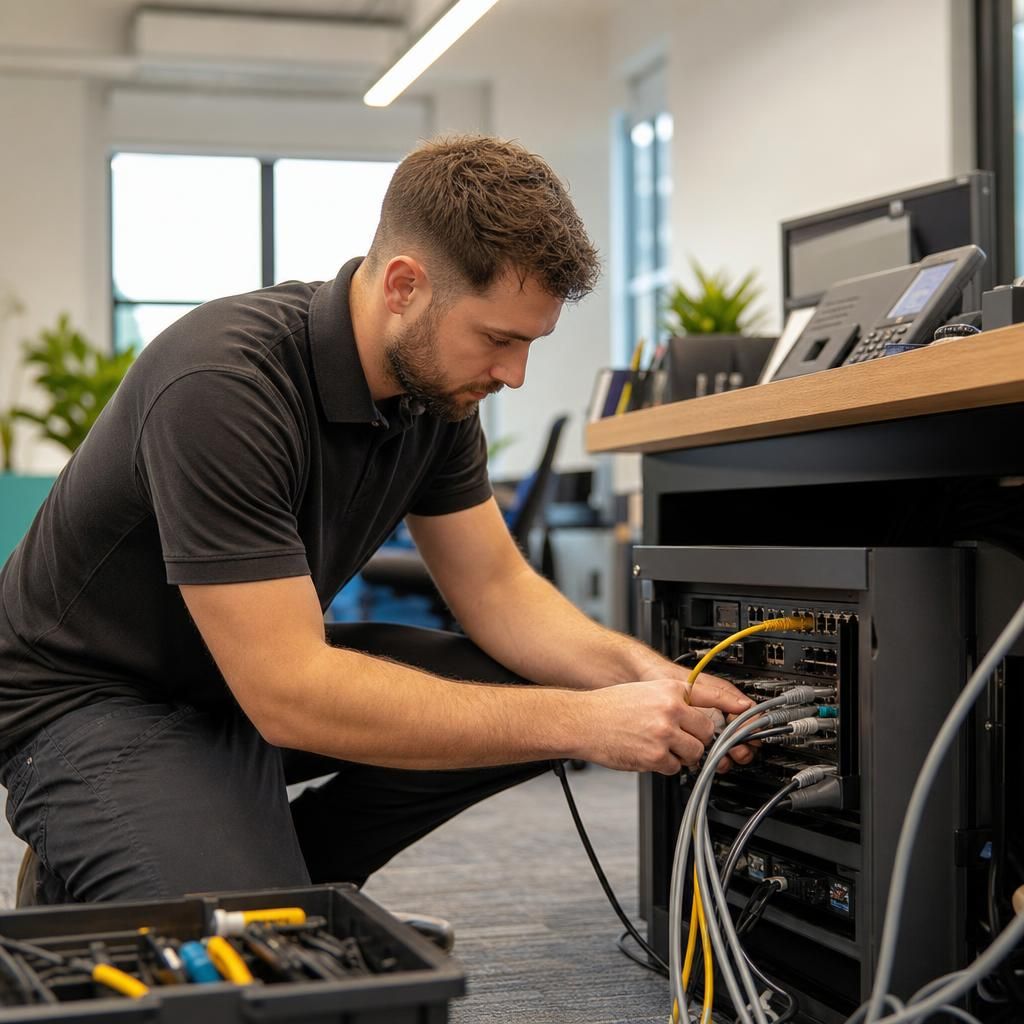
The process usually starts with a detailed requirements assessment and line availability check. Here, the provider reviews your current setup, confirms your address and checks network coverage. You will receive a proposal outlining speeds, contract terms, installation steps and any potential excess construction charges if new infrastructure is needed.
Once agreed, the order is placed with the underlying network and an installation date is scheduled. For standard broadband or fibre-to-the-cabinet services, an engineer visit may be required to test or activate the line and configure the router. This can often be completed within a single appointment, typically lasting one to three hours, depending on the complexity of your internal wiring.
For leased lines and dedicated fibre, the process is more involved. It may include site surveys, wayleave agreements with landlords, external cabling work and internal termination. These projects are phased and can take several weeks, with regular updates and a planned migration to avoid unnecessary downtime.
Get Your Business Connected Today!
Experience seamless connectivity with our expert business broadband installation. Our tailored solutions ensure your SME stays connected, efficient, and ready to thrive in today's digital landscape.
Contact Us