

How can I ensure my business broadband is set up correctly to avoid future connectivity issues?
Get expert insight on setting up business broadband properly to avoid future connectivity issues. Discover industry-leading solutions from a trusted cabling company.
Ensuring your business broadband is set up correctly begins long before an engineer arrives on site. The first step is to assess your current and future requirements in terms of bandwidth, number of users, critical applications, and any cloud-based systems you rely on. This helps determine the right type of connection, appropriate router or firewall, and any resilience options such as backup lines or 4G/5G failover. Careful planning of where equipment will be located, how it will be powered, and how it will connect into your existing network infrastructure is essential. Clear documentation of your network layout, IP addressing, and security policies also reduces the risk of misconfiguration and makes future troubleshooting far easier.
Once the service is installed, thorough testing and monitoring are vital to avoid future connectivity issues. This includes checking internal cabling quality, WiFi coverage, and ensuring that critical devices have stable wired connections wherever possible. Correctly configured routers, VLANs, and quality of service (QoS) settings help prioritise voice, video, and key business applications, preventing congestion at busy times. Security must be built in from the outset, with strong firewall rules, separate guest networks, and up-to-date firmware. Finally, agreeing clear support and maintenance arrangements, with defined response times and escalation paths, ensures that any issues are resolved quickly and that your broadband setup can be adapted as your business grows.
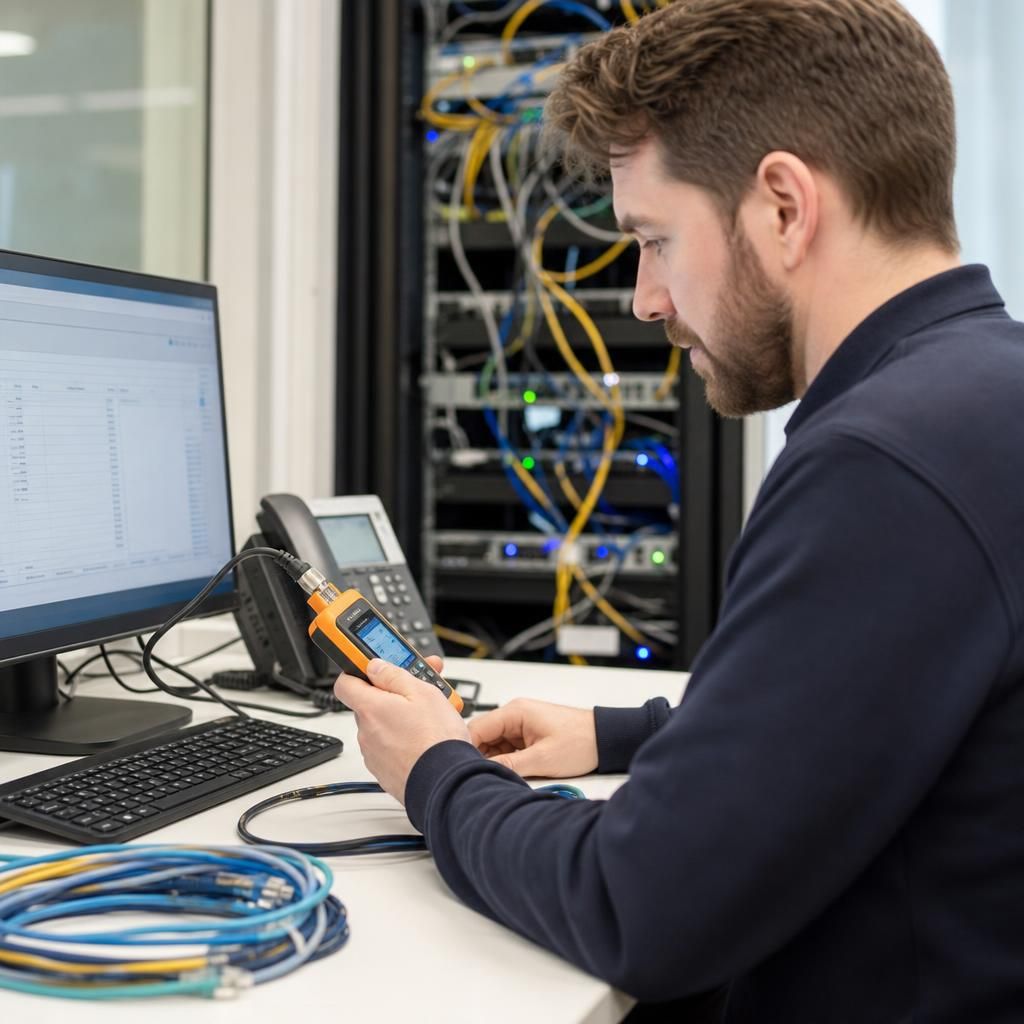
Begin by selecting the right broadband service and hardware for your operational needs. Consider the number of simultaneous users, cloud applications, VoIP requirements, and any remote access demands. Ensure your router, switches, and access points are business-grade, support the necessary speeds, and can be centrally managed. Position core equipment in a secure, ventilated comms area with appropriate power and surge protection.
Next, focus on the internal network design. Use structured cabling to provide wired connections for fixed workstations, phones, and critical devices, leaving WiFi primarily for mobile use. Conduct a professional WiFi survey to identify coverage gaps and interference sources, and configure separate SSIDs for staff and guests. Apply QoS settings to prioritise voice and essential business traffic.
Finally, implement robust security and monitoring from day one. Configure firewalls, strong authentication, and regular firmware updates. Set up monitoring tools or managed services to track performance, detect faults early, and maintain clear documentation for swift issue resolution.
Optimize Your Business Connectivity Today
Ensure seamless internet performance with our expert setup services. Trust our cabling company to enhance your broadband connection and prevent future disruptions. Experience reliable, fast internet now.
Contact Us